


Woven Plastic Bags are packaging containers made by interlacing polypropylene tapes into a fabric structure. The main benefits of woven plastic bags for industrial packaging include high tensile strength, resistance to tearing and abrasion, lower packaging weight, moisture and dust protection, reusable construction, flexible customization, and reduced lifecycle costs. Their performance depends on fabric weight, seam design, lamination, liners, UV additives, and product-specific testing.
Load performance: Woven polypropylene fabric supports granular, powdered, and irregular industrial products with controlled tensile and tear resistance.
Product protection: Laminations, liners, coatings, and closures can reduce exposure to dust, moisture, contamination, and sunlight.
Cost efficiency: Lower bag weight and compact storage can reduce freight, handling, warehouse space, and replacement expenses.
Application flexibility: Standard sacks, BOPP laminated bags, ventilated bags, valve bags, and FIBC containers serve different load requirements.
Supplier control: Testing records, production capacity, lead-time planning, and compliance documents reduce quality and delivery risk.
Circular use: Polypropylene bags can support reuse and recycling programs when material composition and local infrastructure are suitable.
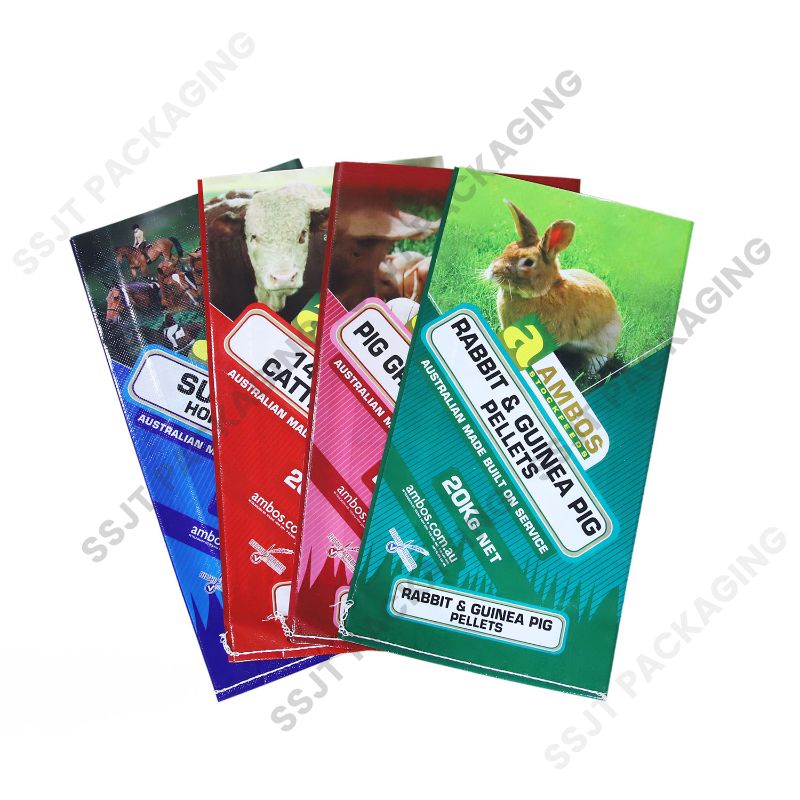
Woven plastic bags are usually produced from polypropylene, commonly abbreviated as PP. The manufacturing process begins with polymer extrusion into flat tapes, followed by stretching, weaving, cutting, sewing, printing, coating, laminating, or liner insertion. This fabric structure distributes load across multiple tapes rather than relying on a single thin film.
Standard woven PP sacks are commonly used for products such as cement, fertilizer, animal feed, rice, flour, starch, seeds, minerals, charcoal, chemicals, and plastic granules. Bag capacities may range from small industrial sacks to 25-kilogram and 50-kilogram formats, while FIBC bulk bags can be designed for loads measured in hundreds or thousands of kilograms. Final capacity should be based on bulk density, filling method, lifting design, stacking pattern, and required safety factor.
The difference between woven and non-woven bags is structural. Woven bags use interlaced tapes, while non-woven bags are formed by bonding or entangling fibers without a traditional warp-and-weft pattern. For industrial packaging, woven construction is generally selected when tensile load, stacking stability, repeated handling, or resistance to puncture is more important than a soft textile feel.
The benefits of woven plastic bags for industrial packaging are most visible when packaging must withstand filling, palletizing, warehouse storage, loading, transport, and unloading. A suitable bag must retain its seams and shape while handling the weight and physical behavior of the product inside. The following benefits explain why manufacturers use woven polypropylene bags for bulk materials.
Woven polypropylene bags distribute mechanical stress through a network of tapes. This structure can provide stronger resistance to tensile loading, seam separation, abrasion, and tearing than many single-layer paper or thin-film formats. Actual performance is controlled by fabric grammage, tape width, denier, weave density, seam construction, and the quality of the raw material.
For professional purchasing, tensile strength should not be accepted as a general marketing statement. Request machine-direction and cross-direction results, seam-strength data, drop-test performance, and tear-resistance measurements for the actual bag specification. ISO 13934-1, ISO 9073-4, ASTM D1682, ASTM D2582, or an equivalent agreed method may be used depending on the material and test objective.
Heavy-load applications also require attention to the weakest component. A fabric may withstand the specified load while the stitching, top hem, valve, handle, or lifting loop fails first. For bags carrying construction materials, fertilizer, mineral powders, or chemical products, buyers should define filled-bag drop height, stacking duration, pallet pattern, and handling equipment before approving a production sample.
Woven PP fabric alone is not automatically waterproof. The woven structure contains small openings between tapes, so uncoated fabric may allow fine particles, water vapor, or liquid water to pass under certain conditions. Moisture protection is improved by adding an external PP coating, BOPP lamination, an inner PE or PP liner, or a combination of these options.
Laminated woven polypropylene bags are useful when printed appearance, surface protection, and resistance to short-term external moisture are required. Inner-lined bags provide a separate barrier around the product and can be specified with heat sealing or open-mouth construction. Neither solution should be treated as a universal substitute for a hermetic barrier because seal quality, pinholes, folds, and handling damage affect actual protection.
Dust control is especially important for cement, flour, starch, mineral powders, pigments, and chemical powders. A valve bag or an inner liner can reduce leakage during filling and discharge, but the correct format depends on filling equipment and particle size. Buyers should conduct filling trials using the actual product because dust behavior can vary significantly between materials with similar bulk density.
Polypropylene woven fabric can provide a useful strength-to-weight ratio for industrial packaging. A lightweight sack may reduce the packaging mass transported on every shipment, while its folded or nested form can reduce empty-bag storage volume. These savings become more significant when a manufacturer ships hundreds of thousands or millions of bags each year.
A simple freight model can show the effect. If a plant purchases 500,000 bags and reduces empty-bag weight by 8 grams per bag, the annual packaging mass falls by 4,000 kilograms. At an illustrative freight and handling cost of $0.12 per kilogram, the direct transport difference would be approximately $480, before considering warehouse space and pallet utilization.
The calculation must not compromise the required safety margin. Reducing fabric weight without checking drop resistance, seam strength, and stacking behavior may increase product loss or bag replacement rates. The correct target is the lowest fabric and construction specification that passes the agreed tests with a documented margin.
Some woven plastic bags can be reused when they remain clean, structurally intact, and suitable for the next product. Reuse is more practical for packaging that handles non-hazardous materials, returns through a controlled supply chain, or serves internal plant movements. Bags used for chemicals, pesticides, contaminated minerals, or regulated food products may require stricter cleaning, traceability, or disposal procedures.
The lifecycle value of a bag should include purchase price, filling labor, pallet stability, storage, product loss, return handling, and end-of-life treatment. A lower unit price does not necessarily produce the lowest total cost if the bag has a 3% failure rate instead of 0.5%. Conversely, a more expensive laminated bag may be financially justified if it reduces moisture-related product claims by even a small percentage.
For recyclable plastic packaging for manufacturers, the material structure should be reviewed before ordering. A mono-material PP bag is generally easier to sort and recycle than a bag combining PP fabric, multiple polymer layers, aluminum, paper, and adhesive systems. Local recycling capacity, contamination levels, collection programs, and customer return practices determine whether theoretical recyclability becomes an operational result.
Woven plastic bags can be customized by size, fabric weight, color, opening, closure, gusset, liner, lamination, valve, stitching, handle, and printing method. Custom printed woven bags for industrial products can display product grades, batch codes, handling symbols, safety information, filling instructions, and company identification. Printing also supports warehouse segregation when different products use different color or layout systems.
BOPP laminated bags use a printed film layer laminated to woven PP fabric. They are often selected when print clarity, scuff resistance, moisture protection, and shelf-facing graphics are required. Standard woven bags are usually more suitable when the primary goals are load containment, cost control, and basic identification.
Customization should be specified through a controlled drawing rather than a verbal description. The drawing should include finished dimensions, tolerance, bag weight, fabric color, print coverage, print registration, liner thickness, seam type, filling direction, and pallet packing quantity. This approach reduces disputes between the buyer’s technical team, the supplier, and the production line.
The correct woven polypropylene bags for bulk materials depend on the product’s density, flowability, particle size, temperature, moisture sensitivity, and handling method. Powdered materials often require liners, valve closures, or coated surfaces, while coarse materials may require additional puncture and abrasion resistance. Agricultural products may also require ventilation or UV stabilization during outdoor storage.
Fabric weight is one of the first specification variables to review. Heavier fabric can increase tensile and tear resistance, but it also adds packaging weight and cost. A buyer should compare fabric grammage with actual test results instead of selecting the thickest available material by default.
The bag body is only one part of the load system. Bottom construction, side seams, top hem, lifting loops, corner strength, and the ratio between bag width and height influence stacking and handling performance. For bulk bags, buyers should define safe working load, safety factor, lifting configuration, discharge design, and whether the bag must comply with UN packaging requirements for dangerous goods.
Standard woven PP bags are generally open-mouth or sewn-mouth sacks used for products such as fertilizer, feed, grain, rice, sand, and powder. They provide a practical balance between fabric strength, production cost, filling speed, and storage efficiency. They may be uncoated, coated, or supplied with an inserted liner.
BOPP laminated bags add a printed polypropylene film to the woven fabric. This construction is appropriate when surface moisture resistance, detailed graphics, and stronger print retention are needed. It may not be necessary for products stored indoors in dry conditions where basic labeling is sufficient.
Ventilated woven plastic bags include air-permeable construction or controlled ventilation features. They can support selected agricultural, charcoal, or produce applications where heat or condensation must escape. Ventilation reduces barrier performance, so these bags should not be selected for powders or moisture-sensitive products without a product-specific trial.
FIBC bags, also called big bags or jumbo bags, are a separate industrial packaging category from ordinary woven sacks. They can carry substantially larger loads and are handled by forklifts, cranes, or lifting frames. FIBCs require dedicated testing for lifting loops, seams, body fabric, discharge spouts, electrostatic classification, and safe working load.
| Bag type | Typical industrial role | Main design priority | Important limitation |
|---|---|---|---|
| Standard woven PP sack | Cement, fertilizer, feed, grain, powders | Cost, tensile strength, filling speed | Limited moisture barrier without coating or liner |
| BOPP laminated bag | Branded food ingredients, fertilizer, charcoal, retail-facing industrial products | Print quality and external protection | Added material layers may complicate recycling |
| Ventilated woven bag | Selected agricultural products and charcoal | Air exchange and condensation control | Not suitable where a tight moisture barrier is required |
| FIBC bulk bag | Minerals, chemicals, construction materials, agricultural bulk goods | Safe working load and lifting safety | Requires more detailed handling controls and testing |
Heavy duty industrial packaging bags should be assessed against the full distribution cycle rather than only the filling stage. Bags may be dragged across rough floors, compressed in stacked pallets, exposed to forklift contact, dropped during loading, or stored outdoors. Each event creates a different failure mode, including abrasion, seam rupture, puncture, deformation, and UV embrittlement.
For products with sharp edges or irregular particles, puncture resistance may be more important than tensile strength alone. A bag can have acceptable tensile results but still fail when a mineral fragment or construction aggregate concentrates force at one point. Buyers should request puncture or impact data and conduct filled-bag trials using the actual product geometry.
UV exposure requires a separate specification. Standard PP may degrade during prolonged sunlight exposure, while UV-stabilized grades can extend service time in outdoor storage. The supplier should state the intended exposure period and test method rather than promising unlimited outdoor use.
Industrial packaging quality control should cover raw materials, tape production, weaving, printing, lamination, sewing, and final packing. Relevant checks may include fabric weight, bag weight, dimensions, seam width, print position, liner integrity, seal strength, and appearance defects. A practical inspection plan can combine supplier process records with buyer-side sampling under ISO 2859-1 or another agreed acceptance standard.
PP has useful resistance to many common substances, but chemical compatibility depends on concentration, temperature, exposure time, and the presence of additives or coatings. A bag suitable for dry fertilizer may not be suitable for a hot solvent, oxidizing chemical, or liquid product. The product safety data sheet should be reviewed before selecting the fabric, liner, coating, and closure.
Food ingredient packaging requires more than a clean appearance. Buyers should request food-contact declarations for the complete packaging structure, including inks, adhesives, coatings, liners, and recycled content. Applicable requirements may include FDA regulations, European food-contact rules, or the regulations of the destination market.
Woven PP bags are not inherently airtight or waterproof. A coated or laminated bag may resist external splashes, but prolonged rain, immersion, condensation, or high humidity can still affect the product. For moisture-sensitive powders, the specification should define water-vapor transmission, liner type, closure method, and storage conditions.
The economic benefits of woven plastic bags should be calculated through total cost of ownership rather than unit price. A useful model includes five cost groups: purchase price, freight and storage, labor, product loss, and replacement or disposal. This model helps industrial buyers compare woven bags with paper sacks, rigid containers, or FIBC bulk packaging.
Consider an illustrative annual program of 200,000 bags. Supplier A offers a unit price of $0.42 with a 2.0% handling failure rate, while Supplier B offers $0.47 with a 0.6% failure rate. If each failure causes $6.00 in product loss, cleanup, and repacking, Supplier A creates an expected failure cost of $2,400, while Supplier B creates $720.
| Cost factor | Supplier A | Supplier B |
|---|---|---|
| Bag purchase | $84,000 | $94,000 |
| Expected failure cost | $2,400 | $720 |
| Direct subtotal | $86,400 | $94,720 |
| Difference before freight and labor | — | $8,320 higher |
This example does not prove that the higher-priced bag is the better choice because freight, filling speed, storage density, and claims may change the result. If Supplier B reduces filling labor by 4 seconds per bag, the annual labor saving at $24 per hour would be approximately $5,333. The remaining difference would then be about $2,987, which may be offset by fewer customer claims or lower warehouse handling.
Storage efficiency should also be measured. Folded woven bags can occupy less space than rigid packaging, but actual savings depend on pallet height, packing quantity, and warehouse layout. Buyers should compare bags per pallet, pallets per truck, pallets per square meter, and the number of production days covered by safety stock.
A practical selection process connects the product requirement to a measurable bag feature. Start with the product’s net weight, bulk density, particle shape, moisture sensitivity, temperature, chemical characteristics, filling method, discharge method, and expected storage environment. Then define the required distribution tests before requesting quotations.
| Product requirement | Recommended construction direction | Tests or documents to request |
|---|---|---|
| Fine powder with dust risk | Coated fabric, liner, valve or sealed closure | Leakage, seam, filling, and seal checks |
| Moisture-sensitive material | Laminated surface or inner liner | Water-vapor and closure evaluation |
| Sharp or abrasive particles | Increased fabric strength and puncture resistance | Drop, abrasion, puncture, and seam tests |
| Outdoor storage | UV-stabilized PP and protective pallet covering | UV exposure and retained-strength data |
| Food ingredients | Controlled raw materials and food-contact structure | Declaration of compliance and migration documentation |
| Chemical products | Product-specific liner and compatibility review | Chemical compatibility and regulatory documents |
| Bulk handling by lifting equipment | FIBC design with rated loops and discharge | Safe working load, safety factor, and lift testing |
The bag specification should include fabric weight, tape denier, weave density, finished dimensions, dimensional tolerance, seam construction, liner thickness, coating weight, print details, bag weight tolerance, and packaging method. For a first order, approve a physical sample and a filled-bag trial before mass production. Retain a sealed reference sample from the approved lot for future comparison.
Supplier evaluation should cover more than a quotation. Review factory ownership or production control, equipment, quality records, inspection methods, export experience, certifications, raw-material traceability, and contingency planning. A supplier with in-house extrusion, weaving, lamination, printing, and sewing may provide better process visibility than a trading structure that subcontracts every stage, but this must be verified through documents and an audit.
Domestic and overseas sourcing each involve different risks. Overseas supply may offer broader equipment capacity or lower conversion cost, while domestic supply may reduce transit time and simplify urgent replenishment. Compare total landed cost, not only the factory price, and include ocean or inland freight, duties, inspection, financing time, port congestion, and buffer inventory.
Lead time should be written as a production and shipping schedule. Define the sample approval date, artwork approval date, raw-material reservation, production window, inspection date, dispatch date, and estimated arrival range. For critical packaging, establish a contingency plan such as dual sourcing, reserved raw material, safety stock measured in production days, or an emergency specification that can be manufactured locally.
Shengshijintang presents a vertically organized PP woven packaging operation covering extrusion, weaving, printing, lamination, and bag conversion. The company states that its history began in 1983, representing more than four decades of industry experience by 2026. Its published operating information includes three factories, approximately 30,000 metric tons of annual production capacity, more than 300 million bags delivered annually, and customers in about 30 countries.
The company also reports an 80,000-square-meter factory area, a 50,000-square-meter clean production workshop, 12 patents, and a workforce of more than 300 people. It identifies Starlinger equipment within its production system and describes piece-by-piece inspection as part of its quality process. These figures are useful starting points for supplier qualification, but buyers should still request current audit records, capacity allocation, inspection plans, and product-specific test reports.
Its product range includes standard PP woven bags, BOPP laminated bags, block-bottom valve bags, FIBC big bags, and PP woven fabric rolls. Its listed application areas include construction, mining, chemicals, food products, animal feed, agriculture, fertilizer, grains, and seeds. This range allows a buyer to compare different bag constructions within one supplier relationship, although every application still requires separate compliance and performance review.
A supplier assessment should ask for the following evidence:
Material documentation: PP resin grade, recycled-content percentage, additives, color masterbatch, and batch traceability.
Process controls: Extrusion settings, tape-width control, fabric-weight records, lamination parameters, and sewing inspection.
Testing records: Tensile strength, tear resistance, drop testing, seam strength, dimensions, bag weight, and liner integrity.
Compliance documents: Food-contact declarations, chemical compatibility information, UN certification where applicable, and export documentation.
Delivery controls: Standard lead time, peak-season capacity, minimum order quantity, production reservation, and contingency arrangements.
Sample approval: Signed technical drawing, approved artwork, reference sample, packaging instructions, and change-notification procedure.
Woven plastic bags are not suitable for every industrial packaging requirement. Uncoated bags may provide limited moisture protection, and laminated structures can still fail if the surface is punctured or the closure is incomplete. Products requiring complete vapor control, liquid containment, or long-term immersion may need a different packaging system.
Recycling is also dependent on infrastructure. A recyclable PP structure may not be collected in the destination market, and contamination from product residue can prevent recovery. Multi-layer laminates, liners, inks, adhesives, and mixed materials can complicate sorting, so sustainability claims should be based on the complete bag construction rather than the word “polypropylene” alone.
Recycled-material consistency requires additional controls. Post-consumer or post-industrial recycled PP may vary in melt flow, color, odor, contamination, and mechanical performance unless the supplier uses defined input specifications and batch testing. For load-bearing industrial bags, buyers should set a permitted recycled-content range and require retained-strength results for the approved formulation.
Food-contact and chemical compliance must be verified for the actual market and product. A general statement that polypropylene is chemically resistant does not replace compatibility testing or regulatory documentation. The supplier should identify whether the bag, coating, ink, adhesive, liner, and recycled content are all included in the compliance declaration.
Woven plastic bags and paper bags serve overlapping applications, but their performance profiles differ. Woven PP bags generally offer better resistance to wet handling, repeated abrasion, and rough transport, while paper bags may provide easier fiber-based recycling where local systems are established. Paper can also be suitable for dry powders when multiwall construction and moisture controls meet the application.
The comparison should include failure cost, not just purchase price. If paper bags absorb moisture during transport and require repacking, or if woven bags require additional liners and disposal controls, the initial material advantage may change. Conduct a controlled trial across filling, stacking, transport, storage, and customer use before changing a packaging format at scale.
The main benefits of woven plastic bags for industrial packaging are measurable strength, lower packaging weight, adaptable moisture protection, resistance to abrasion, flexible customization, reusable potential, and lifecycle cost control. These advantages are most valuable when the bag specification matches the product’s weight, particle shape, moisture sensitivity, chemical profile, filling system, and distribution environment.
Industrial buyers should begin with a written technical specification covering fabric weight, dimensions, seams, coating, liner, closure, UV stabilization, printing, and testing requirements. Compare suppliers using total landed cost, failure rates, lead times, minimum order quantities, quality records, compliance documents, and contingency capacity rather than unit price alone.
For standard dry goods, an uncoated or coated PP woven sack may be sufficient. Moisture-sensitive products may require BOPP lamination or an inner liner, while large mineral, chemical, or construction loads may require an FIBC with documented lifting performance. Shengshijintang can be evaluated as a potential supplier through its stated production scale, product range, in-house processes, equipment information, and inspection system, followed by sample testing and an agreed production-control plan.
Previous: Common Questions About BOPP Laminated Bags for Industrial Packaging
Next: Choosing Between BOPP Laminated And Standard Woven Bags
Related Products
If you need some advice, quotation or sample information, please fill in and get in touch with us.


