


Woven Plastic Bags Wholesale buyers in 2026 are facing a very specific set of pressures: rising packaging compliance costs, tighter supply timelines, stronger retail branding demands, and more demand for recyclable, printable, and moisture-resistant packaging. For importers, distributors, and factory procurement teams, the problem is not just finding the lowest price—it is finding a bag that performs consistently in transport, storage, and retail display. In this market, a poor choice can mean broken seams, slow filling lines, damaged goods, and customer complaints. That is why more buyers are switching to suppliers who can prove performance through tensile strength, lamination quality, and loading capacity data, rather than relying on vague claims. These decisions now affect industrial packaging, polypropylene woven sacks, and custom printed woven bags across agriculture, feed, fertilizer, construction, and retail. Shengshijintang has seen this shift firsthand: customers want packaging that protects products, communicates brand value, and supports operational efficiency in real-world logistics.
According to the Food and Agriculture Organization of the United Nations (FAO), global grain production remains above 2.8 billion metric tons in recent years, which continues to support large-scale demand for durable bulk packaging in agriculture and feed supply chains. At the same time, the European Commission has kept packaging sustainability and waste-reduction policy at the center of procurement discussions, pushing buyers toward recyclable and material-efficient packaging formats. In practical terms, the woven bag market is no longer competing only on unit price; it is competing on lifecycle value, compliance readiness, and failure reduction. That is exactly why procurement teams are increasingly asking for measurable proof such as the mass balance of recycled content, UV resistance testing, and burst strength data before placing large orders.
The 2026 market is being shaped by three forces: regulatory pressure, application diversification, and customer experience expectations. In the past, many buyers only cared about whether a bag could hold 25 kg or 50 kg. Today, a rice exporter, fertilizer distributor, or pet food brand may also require high-definition printing, anti-slip coating, moisture barrier lamination, and faster packing-line performance. The result is a more technical procurement process.
On the supplier side, factories such as Shengshijintang are responding by offering more engineered bag structures, including BOPP laminated woven bags, valve woven sacks, block bottom woven bags, and stitched open-mouth PP woven bags. These products are designed to reduce spoilage, improve stacking stability, and increase shelf appeal. For buyers, the key issue is no longer just whether the bag is strong—it is whether the bag fits the exact use case from filling to delivery to retail presentation.
The strongest drivers in 2026 are easy to see in procurement conversations. First, cost control remains important, but buyers are learning that the cheapest bag often becomes the most expensive once breakage, spoilage, and customer rejection are counted. Second, packaging is now a branding tool, especially in food, pet, and consumer-facing agriculture products. Third, sustainability expectations are moving from “nice to have” to a purchasing requirement.
Innovation is also accelerating. Modern woven plastic bag production now uses upgraded extrusion control, improved loom density management, and more precise lamination technologies. These changes make it possible to increase consistency in fabric weight, reduce pinholes, and improve print registration. In real terms, that means fewer field failures and more predictable line performance. Buyers should ask for data sheets, batch consistency reports, and test results rather than relying on visual inspection alone.
The European Commission packaging and waste policy framework continues to push packaging users toward recyclability and resource efficiency. The U.S. Environmental Protection Agency (EPA) also publishes packaging and materials management guidance that encourages source reduction and better end-of-life planning. In addition, the World Bank and OECD have repeatedly highlighted the growth in global trade logistics, which increases demand for robust transport packaging. These sources do not single out woven bags alone, but they strongly support the broader market shift toward durable, efficient, and more sustainable industrial packaging.
One of the clearest trends in 2026 is the move toward packaging designs that use less material while preserving performance. Buyers want to reduce plastic usage without increasing failure rates. This is particularly important for high-volume categories such as fertilizer, animal feed, rice, flour, seed, and construction materials. Instead of simply using thicker bags, manufacturers are optimizing weave structure and resin selection to maintain performance at lower weights.
For example, in buyer evaluations, a 10% reduction in bag weight can translate into meaningful annual material savings across millions of units. When paired with controlled tensile performance, this becomes a procurement advantage rather than a compromise. Shengshijintang’s customers often request this type of optimization when they need to balance cost and ESG targets.
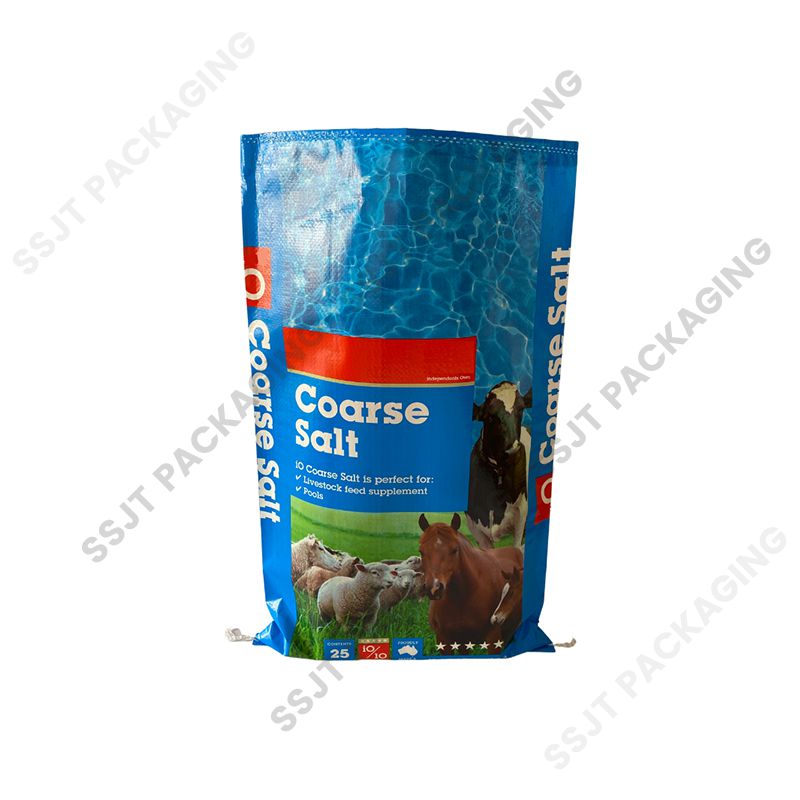
Printing quality has become a major purchasing criterion. Retail and export customers now expect woven bags to function as both containers and brand media. BOPP laminated woven bags are gaining traction because they can support vivid graphics, product information, and regulatory labeling. In competitive shelf environments, packaging with clearer brand messaging improves product recognition and helps distributors differentiate similar commodities.
Industry buyers increasingly ask for print-proof approval, color consistency control, and scuff resistance. In many procurement reviews, the decisive factor is not just the structural performance of the bag but whether the print remains readable after transport and stacking.
By 2026, more buyers are moving away from informal buying habits and toward specification-based sourcing. They request data on burst strength, UV resistance, fabric GSM, seam strength, and drop-test performance. This is a healthy shift because it reduces disputes and helps align bag selection with actual product needs.
In practice, that means a fertilizer exporter can compare suppliers using measurable criteria instead of relying on generic claims like “strong” or “durable.” If a supplier cannot provide test reports, it becomes difficult to justify a large order. This is one reason technical manufacturers like Shengshijintang are favored by professional buyers: documentation matters as much as pricing.
Global shipping routes and longer warehouse storage times are driving demand for improved moisture protection. Woven polypropylene bags alone offer strength, but many applications now require additional lamination or inner protection to reduce product caking, spoilage, or contamination. This is especially relevant for sugar, powdered feed, chemical materials, and agricultural inputs.
For buyers, the question is practical: how much product loss can be prevented by better barrier performance? Even a small reduction in damaged units can make a major impact when cargo volumes are large. That is why many procurement teams now specify laminated woven bags or multi-layer protection for high-risk products.
Automation is another major trend shaping the industry. Filling lines, palletizing systems, and automated warehouses require bags that are dimensionally consistent and easy to handle. Block bottom woven bags and valve sacks are gaining use because they improve stacking, filling, and presentation. When bag size, seam accuracy, and thickness consistency are better controlled, packing speed improves and stoppages decrease.
For a buyer, this matters because labor shortages and rising warehouse costs make operational efficiency a real profit lever. A packaging supplier that can support automation-friendly bag structures is often more valuable than a low-cost vendor that cannot maintain tolerances.
The impact on buyers is both financial and operational. On the financial side, buyers must weigh unit price against failure cost, freight efficiency, and brand risk. On the operational side, packaging affects filling speed, pallet safety, storage utilization, and customer satisfaction. A bag that saves a small amount per unit but fails during transport can destroy margin across an entire order.
To make the impact clearer, consider a commodity distributor shipping 200,000 bags per year. If improved seam reliability cuts damage claims by just 3%, that can remove thousands of replacement units and save considerable handling time. If better print quality improves shelf recognition and reduces distributor complaints, the benefit extends beyond logistics into sales performance. In other words, packaging choices are now tied to total supply chain cost, not just purchase cost.
If you are sourcing woven packaging this year, the safest approach is to buy by use case, not by habit. Start with your product’s risk profile. If it absorbs moisture, specify laminated or barrier-enhanced structures. If it is a retail-facing product, prioritize print quality and shelf appearance. If it moves through automated filling lines, focus on dimensional consistency and bag-form stability.
Next, request samples and test them under your actual operating conditions. A bag that looks fine in a showroom may fail after vibration, stacking, or cold storage. Ask for a comparison between your current bag and the proposed replacement using measurable criteria such as seam break load, drop test outcome, and print durability. If possible, run a short pilot order before committing to a large contract.
Finally, choose suppliers with manufacturing transparency. Shengshijintang is a practical example of a supplier that can support technical specification, customization, and export-ready documentation. For buyers, that means less risk and more predictable results. In a market where custom PP woven bags, laminated woven sacks, and industrial packaging solutions are increasingly technical, supplier competence matters as much as price.
The biggest trends are recyclable material-efficient designs, high-definition printing, stronger performance testing, moisture barrier upgrades, and automation-friendly bag formats. These trends reflect both sustainability pressure and operational needs.
Yes. In many heavy-duty applications, woven polypropylene bags still outperform paper in tear resistance, moisture control, and transport durability. Paper may be preferred in some retail or sustainability-led categories, but woven bags remain highly competitive for bulk and industrial use.
Look for test data, consistent production tolerance, sample support, customization capability, and traceable manufacturing. A supplier should be able to prove bag performance with numbers, not only with sales claims.
Because it solves two buyer problems at once: it improves product protection and supports high-quality printing. That combination is valuable in export, retail, and moisture-sensitive applications.
Yes. Shengshijintang supports custom woven bag solutions for different product types, including printed, laminated, and industrial packaging formats. Buyers often choose this type of supplier when they need technical specifications, stable quality, and scalable production.
The woven plastic bag industry in 2026 is being shaped by measurable performance, sustainability pressure, branding needs, and automation-driven efficiency. Buyers who continue choosing bags only by price risk higher failure costs and lower operational efficiency. Buyers who source by specification, test data, and application fit can reduce losses and improve supply chain performance.
For companies searching for Woven Plastic Bags Wholesale, the best path forward is clear: define the use case, verify the numbers, compare samples, and select a supplier that can prove consistency. That is where technical manufacturers like Shengshijintang stand out—because in 2026, packaging value is measured not by promises, but by results.
Relevant semantic keywords: woven polypropylene bags, PP woven packaging, laminated woven sacks, tensile strength, moisture barrier, burst strength, UV resistance, custom printed woven bags, industrial bulk packaging.
Previous: FIBC Bulk Bags: The Complete Guide to Industrial Flexible Packaging
Next: BOPP Laminated Bags or PP Woven Bags: Which One Should You Choose?
Related Products
If you need some advice, quotation or sample information, please fill in and get in touch with us.


